
fflush c: The function int fflush(FILE *stream); causes the content of an output buffer to be written on a file. The stream remains open after a call to fflush function. If stream is a null pointer, then all such streams are flushed.
All buffers automatically gets flushed when program terminates or because of a call to fclose or when they become full.
Function prototype of fflush
int fflush(FILE *stream);
- stream : A pointer to a FILE object which identifies a stream.
Return value of fflush
fflush(stdout) in c: This function returns zero value on success. If an error occurs, It returns EOF and the error indicator is set.
C program using fflush function
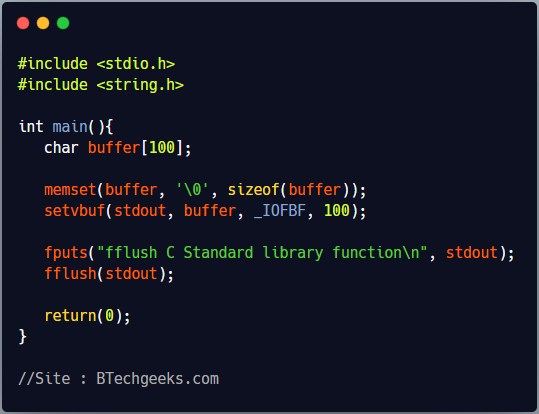
#include <stdio.h>
#include <string.h>

int main(){
   char buffer[100];

   memset(buffer, '\0', sizeof(buffer));
   setvbuf(stdout, buffer, _IOFBF, 100);

   fputs("fflush C Standard library function\n", stdout);
   fflush(stdout);

   return(0);
}
Output
fflush C Standard library function